How Do Porta Potties Work?
The mechanics are simple. Waste drops into the tank, the chemical mix breaks it down and knocks out the smell, and there's no flush, no water line, nothing to freeze or back up. A standard porta potty rental stands about 92 inches tall and measures roughly 44 by 48 inches on the ground, so it fits tight jobsite corners around Apple Valley without eating up space you need for materials or equipment. Service technicians pump the tank, refill the chemical, restock paper, and wipe the unit down on each visit. ANSI/PSAI Z4.3, the industry standard for portable sanitation service, sets one visit a week as the baseline for up to 10 users over a 40 hour week. Heavier use means more visits. If you're staging a construction site services job with a big crew, you'll want to check how many porta potties do i need before you order, since OSHA 1926.51(c) sets toilet counts by headcount, starting at one facility for 20 workers or fewer. A construction worker running to a porta potty on break shouldn't have to wait in line, and that ratio is the reason why.
How Does a Portable Sink Work?
A portable sink works off a self-contained fresh water tank, a foot pump or hand pump, and a wastewater tank underneath to catch the runoff. No hose, no drain hookup. You fill the fresh tank, and the unit does the rest until it runs dry or the gray tank fills. Under 29 CFR 1910.141(d)(2), washing facilities need soap and towels or a hand drying device; hand sanitizer alone doesn't satisfy that standard, so a real handwashing station rental with soap and a drying option matters more than a sanitizer stand. If your work involves paints, coatings, herbicides or insecticides, OSHA 1926.51(f)(1) specifically requires washing facilities for those contaminant contexts. A portable sink rental next to your restrooms covers both the code and the practical need. For quick coverage without plumbing, a hand sanitizer station rental fills gaps but shouldn't replace soap-and-water washing where the standard applies.
How Do Flushable Porta Potties Work?
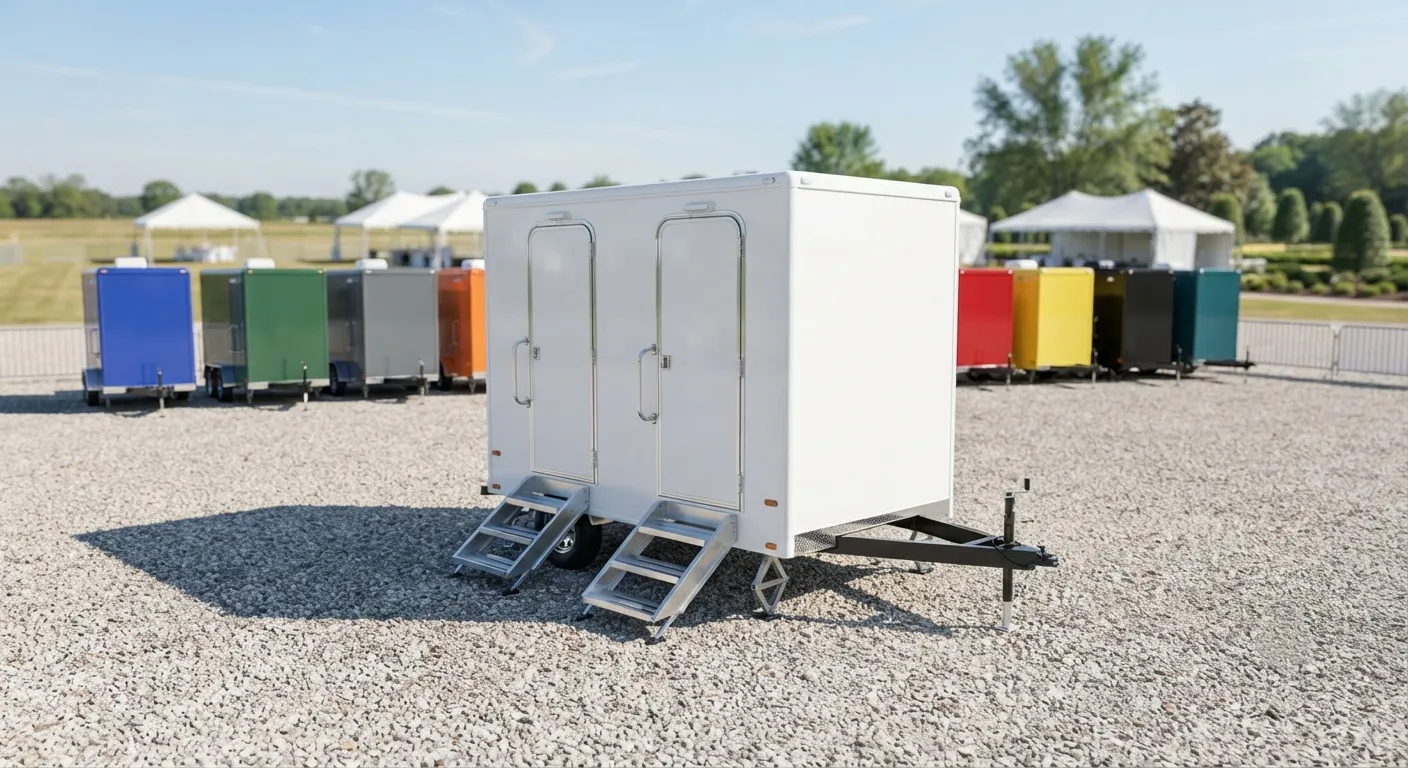
A flushable unit uses a small onboard fresh water tank and a hand or foot pump to rinse the bowl into the holding tank below, which is why it feels closer to a bathroom at home. The deluxe flushable porta potty option is the step up from a standard unit for weddings, VIP areas at events, or any job where comfort matters more than budget. It still needs the same pump-out service as a standard unit, just with a fresh water refill added to the visit. For accessible service, an ada accessible porta potty uses the same flush mechanism but with a larger footprint. ADA Standards section 304.3.1 calls for a 60 inch turning circle inside, and section 404.2.3 sets a 32 inch minimum clear door opening. Where units are clustered, ADA Standards section 213.2 requires at least 5 percent of them, and never fewer than one, to be accessible. For a bigger footprint with real plumbing feel, look at a restroom trailer rental, which runs on a similar tank-and-pump principle but at building scale.

How Do Camping Porta Potties Work?
Camping units run the same way as jobsite ones: sealed tank, chemical treatment, no water needed. The difference is mostly service frequency and placement. Out at a remote site or a family gathering near Apple Valley, you're often further from paved access, so delivery planning matters more than it does downtown. A porta john rental dropped for a weekend campout doesn't need constant servicing the way a busy construction trailer does. If you're near Spring Valley Lake, about 8.4 miles southwest of central Apple Valley, or out toward Mountain View Acres, 11.3 miles west, check service areas to confirm delivery windows. For events instead of camping, an event restroom rental or festival restroom rental setup scales the same tank-and-chemical system up to hundreds of guests.
Septic Tank Cleaning Chemicals: What Do They Do?
Septic tank cleaning chemicals aren't the same as portable toilet chemicals. Portable toilet chemicals control odor and start breaking down waste in a small sealed tank between services. Septic systems are a different animal entirely: a residential septic tank is typically pumped every 3 to 5 years depending on tank size and household size, not treated with an additive to skip pumping. If your tank in Apple Valley is showing signs of trouble, read septic tank warning signs before reaching for a chemical fix. Real service means a truck and a pump, which you can schedule through septic pumping service or septic tank cleaning. Restaurants and commercial kitchens have their own version of this problem: a grease interceptor gets pumped once fats, oils, grease and solids reach 25 percent of the liquid depth, covered under grease trap pumping.
How often do porta potties get serviced?
Weekly is the baseline under ANSI/PSAI Z4.3 for up to 10 users across a 40 hour week. Busy construction sites or multi-day events need more frequent visits. Apple Valley Porta Pros schedules service around actual usage, not just a calendar, so high-traffic units don't run short between pump-outs.
Do porta potties use water?
No. Standard units have no water hookup at all. Flushable and deluxe models carry a small onboard fresh water tank for rinsing, but even those don't connect to plumbing. That's what makes them work anywhere, from a paved lot to a remote worksite.
What chemicals go into a porta potty?
A blue deodorizing solution goes into the tank to break down waste and mask odor between services. It's different from septic tank treatments and different from cleaning products used on hard surfaces. Technicians add it fresh at every scheduled visit.
Can I rent just one porta potty for a weekend project?
Yes. Short-term rentals are common for home projects, small gatherings, or single-day jobs. Check porta potty rental per day for daily pricing, or porta potty rental cost for a fuller breakdown across rental lengths.
How does an ADA porta potty differ from a standard one?
It's larger inside, with a wider door and more turning room to meet ADA Standards. Section 403.5.1 requires a 36 inch clear route to reach it. Otherwise it works the same way: sealed tank, chemical treatment, scheduled service, no plumbing required.
Next step
Get a delivery date
Tell us the address, the dates and the headcount. We size the order and confirm the route.