How many restrooms does a festival in Apple Valley need?
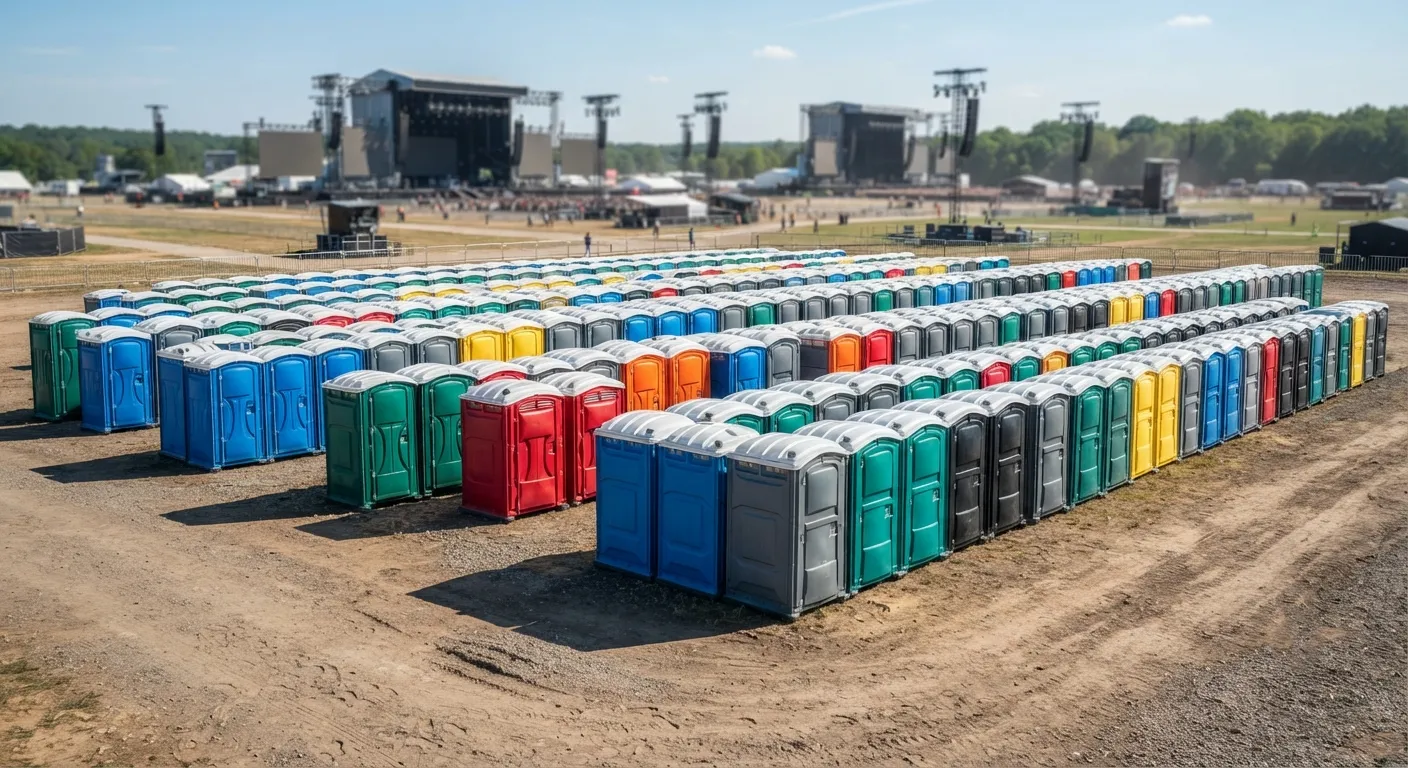
Start with attendance, not guesswork. OSHA 1926.51(c) sets construction ratios at one toilet per 20 workers, and festival planners generally lean on that same math as a floor: crowd size divided by 20, then adjusted up for alcohol sales, food trucks, and hot weather that pushes water and restroom use higher. A festival that expects 800 people over eight hours will run heavier than a corporate picnic with the same headcount, because the traffic bunches around headline acts and meal breaks. We walk the site in Apple Valley before quoting, checking ground access, generator noise near stages, and whether the layout calls for standard units, a bank of deluxe flushable units, or a full restroom trailer. At least 5 percent of any cluster of single-user units has to be wheelchair accessible under ADA 213.2, never fewer than one, and that unit needs a 60 inch turning circle per ADA Standards section 304.3.1. We also check the route in: ADA Standards section 403.5.1 calls for at least 36 inches of clear path, so we skip soft turf and steep curbs when we set the layout. If your event runs near Spring Valley Lake, 8.4 miles southwest, or draws crowds from Mountain View Acres, 11.3 miles west, we factor that drive time into delivery scheduling so units are set and serviced before gates open.
What restroom options fit a festival crowd?
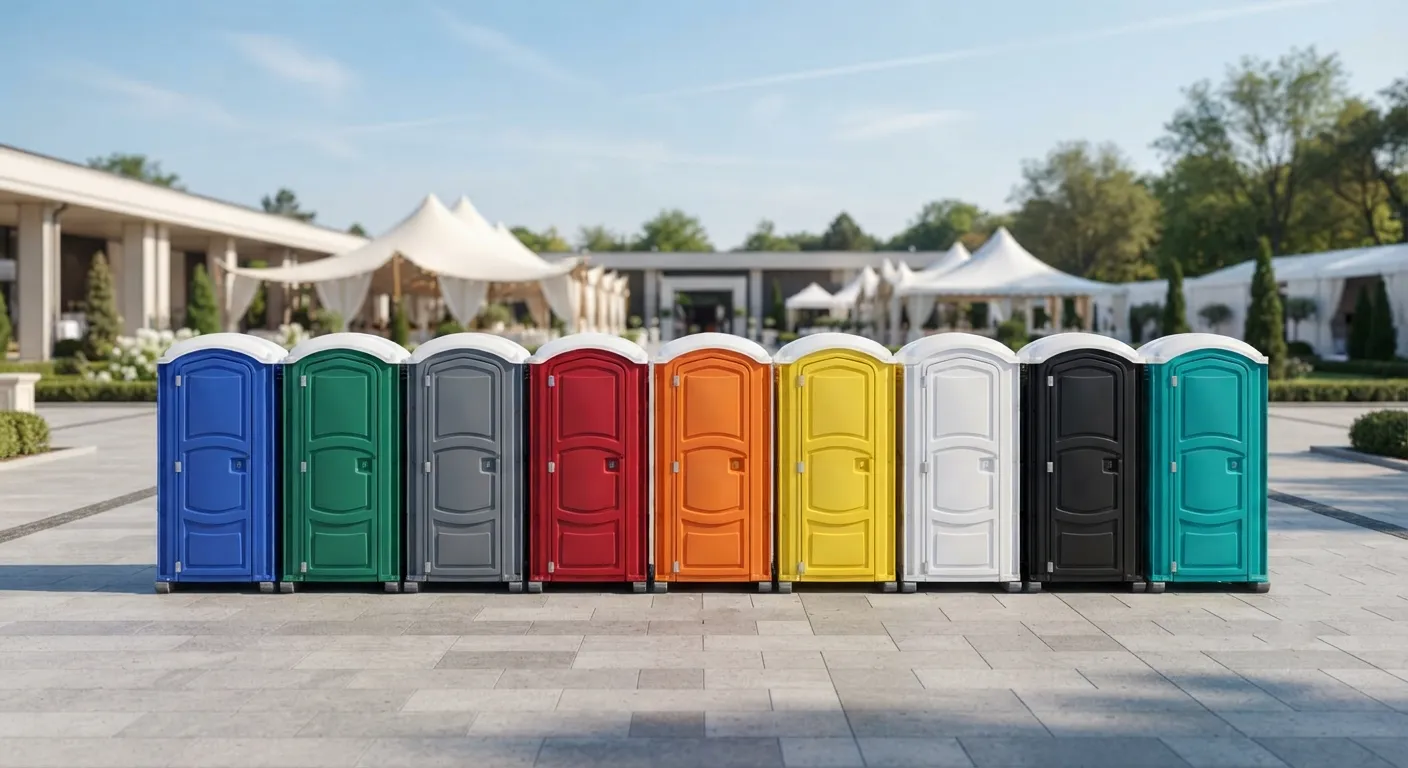
Standard units handle the bulk of a festival crowd at the lowest cost per head, but a mixed layout usually serves the event better. A single standard unit holds a 60 to 70 gallon tank and stands about 92 inches tall, footprint roughly 44 by 48 inches, so it drops into tight festival grids without eating walkway space. VIP areas, sponsor tents, and wedding-style festivals often add deluxe flushable units or a 4 stall restroom trailer for guests who expect running water and a mirror. Larger multi-day festivals sometimes bring in an 8 stall restroom trailer to cut line length near main stages. Handwashing matters as much as toilet count: 29 CFR 1910.141(d)(2) requires soap and towels or a hand-drying device, and sanitizer alone does not satisfy that standard, so we pair units with handwashing stations or a portable sink rental at food vendor rows. Food trucks doing any painting or coating work on-site trigger OSHA 1926.51(f)(1) washing requirements, though most festival vendors never hit that trigger. Waste from vendor booths and teardown usually needs a roll-off dumpster rental or two, sized against expected debris; check dumpster weight limits before you overload one bin with wet trash. Crowd flow around stages and vendor lanes often calls for temporary fence rental or crowd control barrier rental to keep restroom lines from blocking walkways.
| unit | duration | low | typical | high |
|---|---|---|---|---|
| standard | event | 200 | 400 | 800 |
| ada | weekend | 199 | 240 | 300 |
| trailer | event | 2499 | 3500 | 3899 |
| dumpster | weekend | 390 | 440 | 497 |
Why does festival timing change the setup?
Multi-day festivals need mid-event service, not a single drop-off, because tanks fill faster with alcohol sales and long gate hours. ANSI/PSAI Z4.3 sets a baseline of one service visit per week for up to 10 users over a 40 hour week, but a weekend festival compresses that same usage into two or three days, so we schedule mid-event pumping instead of waiting for the standard interval. Night events need lighting: check our light tower rental options if your festival runs past dusk, since OSHA 1926.56(a) sets minimum illumination for work areas and unlit restroom rows create real hazards after dark. Power for food vendors, sound, and lighting sometimes calls for a temporary power pole rather than running extension cords across walkways, which also keeps you clear of the GFCI concerns under OSHA 1926.404(b)(1)(ii). Storage for staging, merchandise, or tools between event days works better with a storage container rental than a locked truck. If your festival sits near Adelanto, 15.7 miles west, or draws from as far as Silver Lakes, 23.4 miles northwest, we build extra drive time into the service schedule so units get serviced on time regardless of distance from our yard.
How far in advance should I book festival restrooms?
Book as soon as your date and attendance estimate are set, ideally four to six weeks out for larger festivals. Apple Valley events booked closer to the date still get service, but unit selection narrows fast during peak festival season. Request a quote early and adjust the count later.
Do festivals need ADA-accessible units?
Yes. ADA Standards section 213.2 requires at least 5 percent of clustered single-user units to be accessible, never fewer than one, with a 60 inch turning circle nearby. We include this in every festival layout regardless of total unit count.
Can Apple Valley Porta Pros handle multi-day festivals?
Yes, multi-day events are common. We schedule mid-event service based on attendance and alcohol service, rather than relying on a single weekly visit, and we coordinate delivery and pickup around your load-in and teardown windows.
What size dumpster fits a one-day festival?
That depends on vendor count and expected food waste. Check 10 yard dumpster rental for smaller festivals and 20 yard dumpster rental for larger ones with multiple food trucks; we can help size it during your quote.
How much does festival restroom rental cost in Apple Valley?
Standard units for event rental run in the range shown above, with trailers and specialty units priced separately based on stall count and duration. See porta potty rental cost for a fuller breakdown by unit type.
Next step
Get a delivery date
Tell us the address, the dates and the headcount. We size the order and confirm the route.